
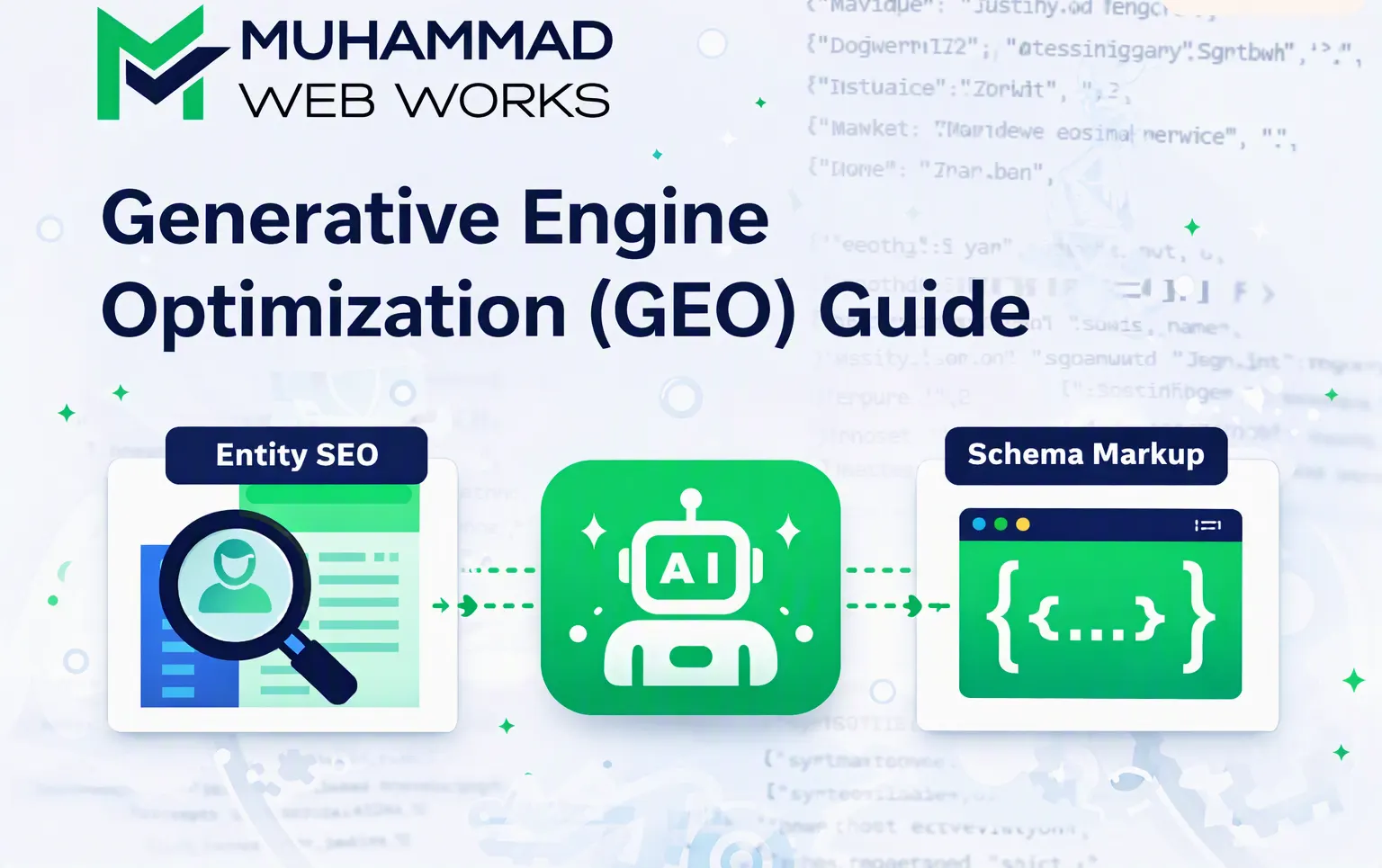
Search engines no longer interpret the web simply as a collection of matching strings and keywords. Modern search engines evaluate entities—distinct, well-defined people, places, organizations, concepts, and things interconnected within vast Knowledge Graphs.
Implementing Entity SEO with Schema Markup is the most direct way to tell search engines and AI models exactly who you are, what services you provide, and why your content should be trusted.
What Is an Entity in Modern SEO?
In search semantics, an entity is a concept or item that is singular, unique, well-defined, and distinguishable from other items. For instance, while “web development” is a generic phrase, “Muhammad Web Works” is a distinct organizational entity with specific attributes: founders, service offerings, physical location, and industry relationships.
As detailed by Search Engine Land’s guide on entity optimization, linking related concepts within your content helps search algorithms unambiguously map your pages to real-world knowledge topics.
Why Entity SEO Is Essential for AI Discovery
- Removes Ambiguity: Schema clearly indicates whether a word refers to a brand, a person, or a product line.
- Builds Topical Authority: By mapping parent and child topics, your site demonstrates full-spectrum subject expertise.
- Feeds Knowledge Bases: Machine-readable data makes it easier for LLM-based search engines to cite your brand accurately.
According to GrowthVibe’s entity optimization research, leveraging linked open data (such as Wikidata references and sameAs attributes) directly strengthens how search graphs index your business identity.
Key Schema Types for Entity Optimization
1. Organization & LocalBusiness Schema
Define your core identity, legal name, logo, parent entity, operating locations, and official social media profiles via sameAs links.
2. Service & Product Schema
Specify the exact service offerings you provide. For agencies delivering SEO, web development, and digital growth services like Muhammad Web Works, nesting specific Service schemas under your parent organization establishes clear commercial relevance.
3. About & Mentions Properties
Within Article and BlogPosting schema, use about and mentions properties linked to Wikidata or Wikipedia URLs. This directly informs the crawler which external entities your article covers.
Step-by-Step Implementation Checklist
- Conduct an Entity Audit: Identify the core entities relevant to your business niche and services.
- Deploy JSON-LD Markup: Embed structured data scripts directly into your WordPress site templates or via Google Tag Manager.
- Connect External Profiles: Use the
sameAsproperty to link LinkedIn, Crunchbase, Google Business Profile, and industry directories. - Validate: Test your pages with Google’s Rich Results Test and Schema.org Validator to confirm error-free formatting.
Frequently Asked Questions
What is the difference between keywords and entities?
Keywords are specific text phrases typed into search bars. Entities are the real-world objects or concepts behind those phrases, complete with attributes and relationships to other entities.
Does schema markup guarantee rich snippets?
No. Schema markup helps search engines understand content and qualifies pages for rich results, but display decisions remain at Google’s algorithmic discretion.